
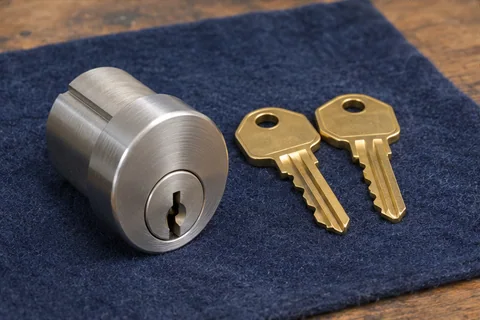
The first question on move-in day is sometimes how many copies of the front-door key are out there. The lock could be in good shape even if nobody knows who still has a spare. Rekeying gives you a different key for a compatible lock and lets you keep the hardware you already use.
LockReach South El Monte can help you work through which locks may be rekeyed and who should hold the new copies. To get started, call 626-416-3016 with the property address, how many doors you're thinking about and any doors that already feel hard to use. If someone manages the property for you, also find out who can approve changes.
What actually changes when a lock is rekeyed?
The cylinder is the part of the lock that reads the shape of a key. A rekey sets up a serviceable cylinder to recognize a different key. The existing trim, handle and deadbolt can stay where they are if they still work as intended. That can be helpful when the hardware matches the door or when you prefer to keep a handle that's comfortable to use.
A different key changes who can use that cylinder. A door that sags or a latch that catches the frame will still need attention. If the handle is loose or the lock only works with a push against the door, ask the locksmith to take a look at the whole opening. The underlying problem may need to be corrected before a rekey is worth doing.
A rekey usually affects one lock at a time. Changing a front-door cylinder won't change a mailbox, gate, building entry or vehicle key. If a key went missing, list the doors that key actually opened. A short inventory helps you cover the right entries without assuming every lock that looks the same is set up the same way.
Time a rekey for the people who still need a key
On move-in day, arrange the key handoff alongside the rest of your schedule. Someone may need to let movers in while another person is still collecting keys from the previous owner. Choose a time when the people who need access will be available and when the property can be secured again after the visit.
For a lost key, make a note of which doors it opened and whether anything on the key ring could identify the address. That may affect which doors you choose to address first. Keep the new copies in separate hands so one lost set doesn't leave everyone locked out.
Compare the scope with replacement
Ask what's included in a rekey estimate before choosing it over replacement. The price can change with the number of cylinders, how easy they are to service, whether there are working keys and what copies you need. If only some cylinders can be kept, ask for a scope that separates those from anything quoted for repair or replacement.
Replacement may be appropriate when the lock is damaged, unsuitable for the opening or difficult for a household member to operate. Consider it if you want a different kind of handle or if the current hardware can't provide a key arrangement that works for you. The rekey-or-replace guide walks through those decisions if you're still choosing between the two.
Make sure the change is clear at handoff
After service, try the new key on every cylinder included in the job. Try the door normally from the side you use, with someone present if the opening could lock behind you. Ask the locksmith how to confirm that an old key no longer works at the doors included in the change. Mark which keys belong to any hardware that stayed on the old setup so nobody has to guess later.
When you're ready to talk about a rekey, call 626-416-3016 with the doors you want to change and the people who need access. If you're moving in or turning a unit over, have the handoff date handy. A short door list and a plan for the new copies will help you make the change without leaving somebody unexpectedly on the wrong side of a lock.
Questions people ask
Can you rekey a lock if I've lost the existing key?
That depends on the hardware and the condition of the lock. Say whether you have any working key, whether the door can currently be opened and what documentation you can provide to authorize the work.
How can I tell whether two doors can use the same key?
The cylinders need to accept a compatible key type, and the hardware has to be suitable for the setup you want. A locksmith can compare the existing locks and explain whether any cylinder would need to be changed.
Will the key change fix a door that sticks?
Rekeying addresses which key works in the cylinder. A sticking bolt or latch may need a separate assessment of the door, frame and hardware.